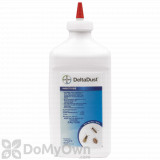
Delta Dust is labeled to treat both bedbugs and carpet beetles. However, it would not be applied in areas where walking on it would be an issue. It is labeled for application in cracks and crevices only. For bed bug control, Delta Dust will not eradicate an infestation and is meant to be used along with other products. It would be a good idea to take a look at our Bed Bug Control Guide for more information on how to do a complete treatment for bed bugs.
Many products that will treat bed bugs will also treat for carpet beetles, but with different application instructions. Please see the below for tips on treating for carpet beetles, and always follow the product label instructions.
How to Get Rid of Carpet Beetles
Carpet beetle infestations can be very difficult to control. The best weapon for getting rid of them is to combine cleaning and insecticides.
• Vacuuming: Carpet beetle larvae like to feed in dark, undisturbed locations like closets, attics, basements, and storage areas. The wide availability of food sources for the larvae (including dust and lint, and pet hair) makes vacuuming the best way to ensure there is minimal food for the larvae to feed on. Vacuuming can also help to remove the larvae and adult beetles already in the home. Regular vacuuming and laundering of rugs, furniture, and linens can help to ensure the beetles are removed and have no food source. If you find a contaminated item, bag and remove this item from your home, if possible.
• Proper storage: Before storing silks, woolens, or furs, dry clean as the beetles are attracted to stains and soiled garments. Store in a well-sealed container, using mothballs. Mothballs can limit the beetle’s attraction to the wool or silk. Store pet food, dried meat, and other dried animal products in a well-sealed container.
• Insecticides: For things that cannot be washed or dry cleaned, insecticides are the best bet for prevention and eradication. Temprid SC is an excellent products to use.
Insecticides can be used for spot-treatments, as a boundary at the edges of rugs, under rugs, under furniture, walls and floors of closets, shelving, cracks, and lint or dust accumulating areas. Be careful around oriental rugs or other fabrics, as some insecticides can stain. Never spray clothing or bedding with insecticide, and always read instructions.
• Outdoor maintenance: Adult carpet beetles are most commonly found outside. They feed on pollen and nectar, but lay eggs in bird, rodent, bee, or wasp nests or old spider webs to give the larvae an abundant food source. Clearing these away from your home, along with checking near highly pollinating plants near your house and checking cut flowers for the beetles before bringing them inside.

While we cannot comment specifically on another person's application, it's not illegal to apply Delta Dust Insecticide in the rain. Delta Dust Insecticide is waterproof. Our concern is that if the rain storm was bad enough, it could potentially wash the product away.
Delta Dust Insecticide has a shelf life of 3-5 years once opened.
Yes, Delta Dust can be applied around eaves for wasps and other listed insects. We recommend using a hand duster such as the B&G Bulb Duster 1150 when applying insecticide dusts treat the small cracks, crevices and gaps that stinging insects will use to nest in.
Yes, Delta Dust Insecticide is perfect for underneath and behind appliances like TVs, refrigerators, microwaves etc, as well as in wall voids and cracks and crevices. Of course, you would not want to dust in the open if you have food sitting out on the countertops exposed.
The manufacturer recommends wearing safety goggles, chemical-resistant gloves along with long sleeves and long pants when applying Delta Dust.
If left undisturbed Delta Dust Insecticide will remain effective for up to eight months in wall voids.
Yes you could use Delta Dust Insecticide inside a car, but you would want to apply it in areas that you do not come into direct contact with, such as underneath mats, in between seats, etc. It can also be applied on furniture under the cushions, at furniture joints, and behind fabric tacking. We recommend using a hand duster such as the B&G Bulb Duster 1150 when applying insecticide dusts. Be sure that you do not apply dust directly on skin contact areas. Excess dust can be wiped up with a damp paper towel.
CimeXa Insecticide Dust is the newest product available in the battle against bed bugs. CimeXa Dust is 100% Silica dust (pyrethroid free), is very safe, odorless, and will not stain. CimeXa Dust will last up to 10 years when applied to undisturbed areas like wall voids, or frames of some furniture such as couches. It is very effective on bed bugs, especially pyrethroid resistant bed bugs. It is also labeled for Ants Crazy Ants, Cockroaches, Firebrats, Silverfish, Spiders, Mites, Bed Bugs, Lice, Fleas, Ticks, and Drywood Termites. When pests come into contact with CimeXa, the product clings to their exoskeleton Delta Dust is 100% waterproof and is a synthetic pyrethroid. Delta Dust would work great for Ants, Bedbugs, Cockroaches, Fleas, Silverfish, Scorpions, Sowbugs, Millipedes, and others listed on the label.
When applying the Delta Dust Insecticide in wall voids and around electrical boxes the dust settles down in between the the studs and the sheetrock that make up the insides of your walls. There is no space for the dust to fall all the way down to the foundation of the home since there are studs, subflooring, pipes, wiring, etc in the walls. The dust settles down into the cracks and crevices and other areas that the insects crawl through. This is how they come in contact with the product and how it eliminates them.