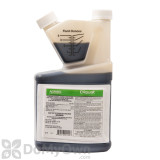
Per the product label Diquat Water Weed and Landscape Herbicide can be used at a rate of .5-2.0 gallons per surface acre in a sufficient carrier along with 16-32 oz per acre of a surfactant for pennywort. Retreat as necessary for densely populated weed areas. If you are using it as a spot treatment, you would use approximately .75 oz per gallon of water plus a surfactant. Spray to completely wet target weeds but not to the point of runoff. Densely packed weeds or mats may require additional applications due to incomplete spray coverage. Repeat as needed. For best results, re-treat weed scapes within 2 weeks of the initial treatment.
No, Diquat Water Weed and Landscape Herbicide cannot be directly poured into lakes, ponds, etc and will need to be mixed with water along with a non ionic surfactant as directed.
Please refer to more information on treating floating and submerged weeds beginning on page 22 of the product label.
Diquat Water Weed and Landscape Herbicide will kill both duckweed and lily plants. You would need to spot treat the duckweed carefully, avoiding the lotus and lily plants. Removing them, if you can, would be the best option to avoid injury.
Diquat Water Weed and Landscape Herbicide is labeled to control coontail and should be used with a surfactant, such as the Non-Ionic Surfactant. The ratio for that product is 1-2 teaspoons per gallon of water. The Diquat can be used as a broadcast application or a spot spray. It is labeled for various broadleaf weeds and could potentially kill them if the product drifts.
No, Diquat Water Weed and Landscape Herbicide does not travel systemically through the soil and can be used as an edging or pruning tool in driveways, Per the product label, Diquat Water and Weed must be applied only to the select, narrow-banded areas and will only control vegetation growing within the width of the spray application.
You will want to spray the weeds to completely wet but not to runoff. Do not apply when heavy rainfall is expected within 24-48 hours to prevent any drainage or runoof into the lawn. Densely packed weeds or mats may require additional applications due to incomplete spray coverage.
Review the product label for more information and complete application instructions before use.
Diquat Water Weed and Landscape Herbicide would be a great choice for treating specific weeds listed on the label. If you would like to stop weeds from growing in bareground areas you can apply a soil sterilant such as TVC Total Vegetation Control. This product stay in the ground for up to one year, so you would only want to use it in areas where you don’t have or want any desirable plants for at least this long.
Diquat Water Weed and Landscape Herbicide is not meant for use on grazing pastures, and states several times on the product label not to apply to areas that are grazed on or used to feed livestock. You may wish contact the manufacture directly for clarification at 1-877-AGRISEL, or via their website's contact page here.
Diquat Water Weed and Landscape Herbicide should be applied when temperatures are between 65 degrees and 85 degrees. Per the product label, densely packed weeds or algea mats may require additional applications due to incomplete spray coverage. Re-treat as needed.
If you are applying Diquat Water Weed and Landscape Herbicide to floating weeds such as duckweed, then you want to spray the weeds from above from the shore or from a boat. If you are treating submerged weeds, then you could potentially pour the herbicide into the water, however whether this will be effective may depend on the specific target weeds. Be sure that you follow local regulations regarding the use of aquatic herbicides in areas that connect to public waters and check the full product label regarding your target weeds.
Diquat Water Weed and Landscape Herbicide is not labeled for poison ivy. This product would not be used in home lawns as it will also kill your grass as will RoundUp. To selectively kill poison ivy without harm to your lawn you would use something like Monterey Weed Wacker.
Diquat Water Weed and Landscape Herbicide is labeled to control watermilfoils.
Diquat Water Weed and Landscape Herbicide should not harm bees when used as directed. Try to time applications to when bees are not in the area.
The best time to apply Diquat Water Weed and Landscape Herbicide is when target weeds are actively growing and temperatures are between 65-85 degrees.
Diquat Water Weed and Landscape Herbicide is not labeled for smartweed. Rodeo would be a better option.
Diquat Water Weed and Landscape Herbicide is a great option for duckweed in ponds as directed on the product label. For duckweed control, apply Diquat Water Weed and Landscape Herbicide at 1-2 gallons per acre plus 32 oz per acre of surfactant in at least 100 gallons of water. Treatment of dense weed areas may result in oxygen loss from decomposition of dead weeds. This loss of oxygen may cause fish suffocation. Therefore, treat only 1/3 to ½ of the water body area at one time and wait at least 14 days until the next application.