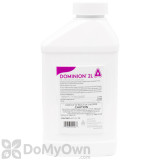
Dominion 2L Termiticide - Questions & Answers

Displaying 31 to 40 (of 141 questions)
  • Asked by Thomas from Parkland, Fl
    01/27/2014
    Q
    Whitefly in ficus
    I've done a root drench and also sprayed the hedges at the 1.5oz to 100 gallon rate about 10 days ago and then another round a couple days ago and it seems that the whitefly numbers are actually increasing. There are clouds of whiteflies above the shrubs where previously there were not. The root drench was at a higher rate as recommended on the label. I'm concerned that this product does not work as indicated.
    A
    Please be advised that it can take 8 weeks a systemic product to be translocated throughout the plant.  If you are trying to treat an active infestation, doing a foliar spray with a product like Talstar P is the better option because it will help to kill anything that you spray directly and will leave a residual of up to 30 days.  Please be advised that the instructions on the product label should always be followed.  Mixing a product stronger or applying more often than stated does not make it any stronger or help it to be absorbed quicker.
    Was this answer helpful to you?   Yes No
    4 of 4 people found this answer helpful.
  • Asked by Linda from Fort Lauderdale Florida
    04/20/2013
    Q
    Can I use dominion 2L on my shrubs?
    I live in s.florida and we are all infested with white fly. I do not have ficus , but do have a large variety of ornamentals and tropical plants. I think the directions on the label are confusing.
    A
    You can use Dominion 2L to treat trees and shrubs for whitefly. Most people use a 5 gallon bucket or a large watering can to apply Dominion as a soil drench. You will need 0.1 to 0.2 fl. oz. (3 to 6 mL) of Dominion per foot of shrub height or 0.1 to 0.2 fl oz per inch of trunk diameter for trees. The amount of water that is used will vary depending on soil conditions and volumes that are easy for applicators to use. The minimum amount of water that should be used is 1 pint per foot of shrub height (or inch of trunk diameter for trees) but you may use 1 quart -1 gallon of water per foot of height (or inch of trunk diameter for trees) as well. Denser soils such as clay do not accept water as readily, so the lower volume of water is suggested.  Since sandy soils can accept more water, using the higher volume of water is preferred. After the soil drench has been applied you should water it in with at east 1/2 inch of water. Note: Water simply acts as a carrier and it is important that even distribution of the product is achieved. Thus, more water may be used if the applicator feels runoff will not occur and proper penetration of the root zone is achieved. Insecticides applied to the soil are taken up by the roots and translocated throughout the tree or shrub. Root/soil drenches offer the advantage of requiring no special equipment to apply (other than a bucket or watering can). However, surface layers of organic matter, such as mulch or leaf litter, can bind the insecticide and reduce uptake. Before applying drenches, it is important to remove or pull back any mulch or dead leaves so the insecticide solution is poured directly on the mineral soil. It is also important to keep the soil around the tree or shrub moist for the next 7-10 days after applications to encourage uptake. We also recommend using a product with an active ingredient that is different than the soil drench for a foliage application while you are waiting for the Dominion to translocate through the ficus. Talstar P is the most popular choice for foliage application on ficus for white fly.
    Was this answer helpful to you?   Yes No
    1 of 1 people found this answer helpful.
  • Asked by Bill from Jupiter Fl
    11/17/2012
    Q
    What is the mixture rate for soil drenching around a 20' tall coconut palm tree with whitefly infestation
    A
    Most people use a 5 gallon bucket or a large watering can to apply Dominion as a soil drench. You will need 0.1 to 0.2 fl. oz. (3 to 6 mL) of Dominion per foot of shrub height or 0.1 to 0.2 fl oz per inch of trunk diameter for trees. The amount of water that is used will vary depending on soil conditions and volumes that are easy for applicators to use. The minimum amount of water that should be used is 1 pint per foot of shrub height (or inch of trunk diameter for trees) but you may use 1 quart -1 gallon of water per foot of height (or inch of trunk diameter for trees) as well. Denser soils such as clay do not accept water as readily, so the lower volume of water is suggested.  Since sandy soils can accept more water, using the higher volume of water is preferred. After the soil drench has been applied you should water it in with at east 1/2 inch of water. Note: Water simply acts as a carrier and it is important that even distribution of the product is achieved. Thus, more water may be used if the applicator feels runoff will not occur and proper penetration of the root zone is achieved. Insecticides applied to the soil are taken up by the roots and translocated throughout the tree or shrub. Root/soil drenches offer the advantage of requiring no special equipment to apply (other than a bucket or watering can). However, surface layers of organic matter, such as mulch or leaf litter, can bind the insecticide and reduce uptake. Before applying drenches, it is important to remove or pull back any mulch or dead leaves so the insecticide solution is poured directly on the mineral soil. It is also important to keep the soil around the tree or shrub moist for the next 7-10 days after applications to encourage uptake. We also recommend using a product with an active ingredient that is different than the soil drench for a foliage application while you are waiting for the Dominion to translocate through the ficus. Talstar P is the most popular choice for foliage application on ficus for white fly.
    Was this answer helpful to you?   Yes No
    11 of 13 people found this answer helpful.
  • Asked by Carl
    10/13/2024
    Q
    How do I apply it as a drench for trees that are close to one another
    Some of my trees are only seven or so feet apart
    A

    Dominion 2L Termiticide is applied at 0.1 to 0.2 fl oz per inch of trunk diameter for trees at the base of the tree inside the drip line.  Apply uniformly around the base of the tree in no less than 10 gallons of water per 1000 square feet. Direct application to the root area. Even if the trees are close, as long as you are applying the correct rate per the diameter of each tree, with enough water, that is what matters. Please read the product label for complete application instructions. 

    Was this answer helpful to you?   Yes No
  • Asked by Alvin from Miami, Florida
    11/18/2013
    Q
    I want to use Dominion 2L for white flies on plants on the porch. How much should go in 1 gallon of water?
    I plan to apply 6-8 ounces of solution three times a month.
    A
    It is important to be sure you are following the instructions on the product label for usage amounts allowed per acre per year.  When treating for white flies as a soil drench Dominion only needs to be applied twice a year.
    You will need 0.1 to 0.2 fl. oz. (3 to 6 mL) of Dominion per foot of shrub height or 0.1 to 0.2 fl oz per inch of trunk diameter for trees. The amount of water that is used will vary depending on soil conditions and volumes that are easy for applicators to use. The minimum amount of water that should be used is 1 pint per foot of shrub height (or inch of trunk diameter for trees) but you may use 1 quart -1 gallon of water per foot of height (or inch of trunk diameter for trees) as well. Denser soils such as clay do not accept water as readily, so the lower volume of water is suggested.  Since sandy soils can accept more water, using the higher volume of water is preferred. After the soil drench has been applied you should water it in with at east 1/2 inch of water. Note: Water simply acts as a carrier and it is important that even distribution of the product is achieved. Thus, more water may be used if the applicator feels runoff will not occur and proper penetration of the root zone is achieved. Insecticides applied to the soil are taken up by the roots and translocated throughout the tree or shrub. Root/soil drenches offer the advantage of requiring no special equipment to apply (other than a bucket or watering can). However, surface layers of organic matter, such as mulch or leaf litter, can bind the insecticide and reduce uptake. Before applying drenches, it is important to remove or pull back any mulch or dead leaves so the insecticide solution is poured directly on the mineral soil. It is also important to keep the soil around the tree or shrub moist for the next 7-10 days after applications to encourage uptake.
    We also recommend using a product with an active ingredient that is different than the soil drench for a foliage application while you are waiting for the Dominion to translocate through the ficus. Talstar P is the most popular choice for foliage application on ficus for white fly.
    Was this answer helpful to you?   Yes No
    2 of 4 people found this answer helpful.
  • Asked by Roy from Islamorada Fl
    04/18/2013
    Q
    What is the best product for treating Florida White Fly? I have 75 palms and 25 Gumbo Limbo.
    I manage a property in Florida Keys. Need to know what is the best product and how much to apply on each tree and how much product do I need.
    A
    You will want to use a systemic insecticide such as Dominion 2L to control the whitefly. Most people use a 5 gallon bucket or a large watering can to apply Dominion as a soil drench. You will need 0.1 to 0.2 fl. oz. (3 to 6 mL) of Dominion per foot of shrub height or 0.1 to 0.2 fl oz per inch of trunk diameter for trees. The amount of water that is used will vary depending on soil conditions and volumes that are easy for applicators to use. The minimum amount of water that should be used is 1 pint per foot of shrub height (or inch of trunk diameter for trees) but you may use 1 quart -1 gallon of water per foot of height (or inch of trunk diameter for trees) as well. Denser soils such as clay do not accept water as readily, so the lower volume of water is suggested.  Since sandy soils can accept more water, using the higher volume of water is preferred. After the soil drench has been applied you should water it in with at east 1/2 inch of water. Note: Water simply acts as a carrier and it is important that even distribution of the product is achieved. Thus, more water may be used if the applicator feels runoff will not occur and proper penetration of the root zone is achieved. Insecticides applied to the soil are taken up by the roots and translocated throughout the tree or shrub. Root/soil drenches offer the advantage of requiring no special equipment to apply (other than a bucket or watering can). However, surface layers of organic matter, such as mulch or leaf litter, can bind the insecticide and reduce uptake. Before applying drenches, it is important to remove or pull back any mulch or dead leaves so the insecticide solution is poured directly on the mineral soil. It is also important to keep the soil around the tree or shrub moist for the next 7-10 days after applications to encourage uptake. We also recommend using a product with an active ingredient that is different than the soil drench for a foliage application while you are waiting for the Dominion to translocate through the palm. Talstar P is the most popular choice for foliage application on ficus for white fly.

    Was this answer helpful to you?   Yes No
    3 of 3 people found this answer helpful.
  • Asked by Clair from Hamilton, Nj
    04/29/2013
    Q
    I am using Dominion 2L Termiticide on a termite infested stump...
    I purchased Dominion 2L to use on an old stump that is infested with termites. The stump is about 6-8' from the house. There are no signs as of yet that the termites have been in the house. What is the best way to apply to the stump? Also, should I dig a trench in the soil around the perimeter of the stump and apply there as well?
    A
    You can drill into the stump and then inject Dominion 2L into the stump using a hand pump sprayer. You can also choose to trench around the stump and apply the product to the trench. If your house has not received a termite barrier treatment in the last 5 years you should plan trenching and treating around your home as well: How To Do A Termite Treatment
    Was this answer helpful to you?   Yes No
    2 of 2 people found this answer helpful.
  • Asked by Jorge from Hollywood, Fl
    06/20/2013
    Q
    Hello I have a yard surround by 9ft ficus trees and also my St. Auguestin grass has cinch bug.
    Do you recommend this product? If so how do want me to apply to both bush and grass?
    A

    You can use Dominion 2L to treat trees and shrubs for chinch bugs. Most people use a 5 gallon bucket or a large watering can to apply Dominion as a soil drench. You will need 0.1 to 0.2 fl. oz. (3 to 6 mL) of Dominion per foot of shrub height or 0.1 to 0.2 fl oz per inch of trunk diameter for trees. The amount of water that is used will vary depending on soil conditions and volumes that are easy for applicators to use. The minimum amount of water that should be used is 1 pint per foot of shrub height (or inch of trunk diameter for trees) but you may use 1 quart -1 gallon of water per foot of height (or inch of trunk diameter for trees) as well. Denser soils such as clay do not accept water as readily, so the lower volume of water is suggested.  Since sandy soils can accept more water, using the higher volume of water is preferred. After the soil drench has been applied you should water it in with at least 1/2 inch of water. Note: Water simply acts as a carrier and it is important that even distribution of the product is achieved. Thus, more water may be used if the applicator feels runoff will not occur and proper penetration of the root zone is achieved. Insecticides applied to the soil are taken up by the roots and translocated throughout the tree or shrub. Root/soil drenches offer the advantage of requiring no special equipment to apply (other than a bucket or watering can). However, surface layers of organic matter, such as mulch or leaf litter, can bind the insecticide and reduce uptake. Before applying drenches, it is important to remove or pull back any mulch or dead leaves so the insecticide solution is poured directly on the mineral soil. It is also important to keep the soil around the tree or shrub moist for the next 7-10 days after applications to encourage uptake. We also recommend using a product with an active ingredient that is different than the soil drench for a foliage application while you are waiting for the Dominion to translocate through the ficus. Talstar P is the most popular choice for foliage application on ficus for white fly.
    Was this answer helpful to you?   Yes No
    0 of 1 people found this answer helpful.
  • Asked by Chris from [email protected]
    07/10/2013
    Q
    How often should I drench for whitefly when using Dominion 2L?
    I have several triple cluster Christmas Palms infested with whitefly. I read the suggestions on drenching with Dominion 2L, but how frequently should I drench? I don't want to use too much and hurt the plant or too little and not get rid of the bugs
    A
    According to the manufacturer the product should last in the plants you treat for the season up to 1 year, so 1 application per year should be all you need. As long as you follow the application directions on the product label you will get rid of the whiteflies and the Dominion is designed to be absorbed into the tree without harming it. Please let us know if you have any other questions.
    Was this answer helpful to you?   Yes No
    0 of 1 people found this answer helpful.
  • Asked by Caryn from Nazareth, Pa
    09/26/2021
    Q
    How often do I apply a soil drench Dominion 2L to my Maple trees to kill Spotted Lanternflies?
    I'm trying to treat all of my Maple Trees that are infested with Spotted Lantern Flies. I need to know how often I need to apply the soil drench in order to control them.
    A

    Dominion 2L Termiticide has not yet added spotted lantern Fly to their label. You can consult with your local extension office to see if they can advise to use. We do carry Safari that is labeled for spotted lantern fly as well. 

    Was this answer helpful to you?   Yes No
Displaying 31 to 40 (of 141 questions)