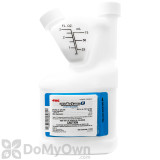
No, Talstar P (Talstar One) is not labeled for moles or grubs and most likely will not provide satisfactory results when used to control them. We do have several products that are specifically labeled for grub worms on our website: Grub Worm Control. We also recommend that you contact your local cooperative extension office and inquire about the best time to start treatments for grubs in your region. In many parts of the country, the grubs are already matured and they are emerging as adult beetles. For more products and treatment information, please check out our article on How to Get Rid of Moles.
Talstar P is labeled to be used in poultry houses and chicken coups as long as you follow the instructions on the product label. You must make sure your chickens are out of the area while you apply Talstar P and then they can return to the area as soon as the area has completely dried. This product can be used in other areas where pets may go as long as they are out of the area while the application is being made. Once the treated areas are completely dry, then it is safe to resume normal activity. You may view the full product label here: https://www.domyown.com/msds/Talstar_P_Professional_Insecticide_Label_2020.pdf
Talstar P Professional Insecticide is our most popular selling product for mosquito control. It is a liquid concentrate that you mix with water and apply using a one gallon hand pump sprayer. The key is to apply it to all shrubs, trees, and other foliage around the house or patio you are trying to provide relief at. It should be directed not only on top of the leaves and plants, but on the underside of the leaves as well which is where the mosquitoes hang out. It should be applied every 30 days for optimum control. Best of all it will not harm any birds in the area.
You would not want to use both Taurus SC and Talstar P on top of one another. It is never necessary to use more then one insecticide as it can have a reverse effect and detour the targeted pests from the area. Talstar P is our most common insecticide for general pest control. Taurus SC is our top recommendation for pest control and while it is labeled for other pests as well, Talstar has a broader label. If you would like to use both products you can use Talstar P inside your home along baseboards and cracks and crevices. Taurus SC is only labeled for outdoor use so you can apply Taurus around the perimeter of your home. Please let us know if you need any further information. We are always happy to help.
According to the Talstar P (Talstar One) product label: Chinch Bugs infest the base of grass plants and are often found in the thatch layer. Irrigation of the grass area before treatment will optimize the penetration of the insecticide to the area where the chinch bugs are located. Use higher volume applications if the thatch layer is excessive or if a relatively long mowing height is being maintained. Chinch Bugs can be one of the most difficult pests to control in grasses and the higher application rates (Up to 1 fluid oz. per 1000 square feet) may be required to control populations that contain both nymphs and adults during the middle of the summer.