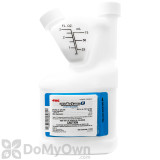
Yes, Talstar P can be used outdoors for kissing bugs, as well as various other pests as well. The mixing ratio is 1 fl. oz. per gallon of water.
Be sure that you do not expect rain for at least 2 hours after Talstar P (Talstar One) application. Once dried Talstar leaves a residual for 2-3 months.
Talstar P is our most popular product for general pest control. It is labeled for over 75 different pests and can be used indoors and outdoors. It is safe for cats and other pets if used as directed. Cats need to be kept out of the area during application and until all surfaces are dry. It is fine for them to return to the area once it is dry.
Talstar P (Talstar One) is a great product to use for fungus gnat control. It is to be used inside and outside the home, but will only kill the adults as the larvae is protected in its egg form much like a chicken egg is protected until cracked. To control the larvae you would need to mix the NyGuard IGR (birth control) in with the Talstar. NyGuard is labeled for fungus gnats as well as a large variety of other insects to sterilize the adults from being able to lay viable larvae. This will control the population drastically in keeping new ones from developing. You should mix 1 ounce of Talstar P with 4 ml of NyGuard IGR to each gallon of water you use. Talstar P can be used as a broadcast over the entire lawn or just as a perimeter treatment. You will want to focus on the mulch bed area and the underside of shrubs, bushes, or trees in the area. It is completely safe to spray on ornamentals. In the garage area, spray as crack and crevice and focus on damp areas/reducing the water/moisture. Please let us know if you have any further questions.
Talstar P can be applied on the ground when there is a small amount of dew. Allow to fully dry prior to rain fall, 24 hrs.
For roach control using Talstar P, we would recommend using the higher rate of 1 oz. of Talstar P per gallon of water. Keep in mind that you should not rely on a spray like Talstar P as the only product you are using to eliminate a roach infestation. We also recommend using a roach bait gel and an Insect Growth Regulator (IGR) for the most complete roach control. We sell these items together in our Roach Control Kits. Please take a few moments to review our online Roach Treatment Guide for more tips.
Making a pesticide like Talstar P (Talstar One) too strong can actually backfire. Areas that are treated with this overly concentrated spray will be repellent and insects will simply avoid the treated areas prolonging the infestation. Simply wipe down, or wash off areas of application and re-apply at the correct rate of 1 oz to a gallon of water.
We generally recommend using a pyrethroid such as Talstar P Professional Insecticide or Permethrin SFR as a preventative treatment in late spring/summer before egg hatch to protect trees. If trees are badly infested, then they should be removed and either chipped or burned.
Keep in mind that trees which become infested with bark beetles are almost always susceptible due to some other existing weakness such as drought or disease.
Phantom is a non-repellent insecticide that also has a transfer effect and is especially useful for insects that are social or extra sensitive like ants, roaches or bedbugs. Talstar P on the other hand will have a faster knockdown rate and is a bit more versatile as it can be used in more areas and for a wider variety of insects. When trying to decide which insecticide to use you need to know: 1. What are you trying to eliminate? 2. What areas need to be treated? After you answer those questions, read the product labels to make sure the pest and the treatment area are both listed. If you still need help deciding you can call us at 866-581-7378.