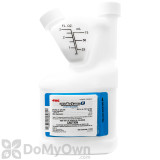
When treating for chinch bugs with Talstar P, it is recommended that you do a second treatment 21-30 days after the first treatment. You will use 1 fl. oz. of Talstar P per gallon of water. This will treat 1000 square feet. Be sure to water the product in at least 0.5 inches after it has been applied.
Some insecticides, like Talstar P, can be harmful to beneficial insects such as honey bees. Per Talstar P's label, Talstar "is highly toxic to bees exposed to direct treatment of residues on blooming crops or weeds", so we wouldn't recommend spraying while bees are present or on blooms that bees can later land on. Tekko Pro IGR is just a growth regulator not an insecticide so as long as it's used as directed, it shouldn't harm beneficials. As far as BTI, if you're referring to the BTI Mosquito Dunks, that product is a larvacide and it only goes in water retention sites. If you meant Monterey B.T. Insecticide, the product "has no effect on birds, earthworms or beneficial insects such as honeybees and ladybugs, when used as directed." We recommend to always read the label of the product you decide to use to know how to use it properly and to check how it can affect beneficial insects.
We apologize, but there is no way we can say for sure if the tree will survive. We recommend that you contact a local arborist with your cooperative extension office to determine the extent of the damage of the tree. Talstar is labeled for a foliar spray starting in April through June.
Bagworm recommendations:
It is important to start control methods before a major infestation occurs. Once the bagworms have matured and have formed the "bag" most chemical control methods will no longer work.
You can manually control bagworms by simply plucking them off of the infested trees and dropping them into a bucket of soapy water or squishing them. This control method is most useful during fall, winter and early spring, before the eggs inside the bag have hatched.
Chemical control may be achieved when the larvae are small and just emerging from the over-wintering bag. Use a concentrated liquid insecticide such as Talstar or Tempo. Foliage should be thoroughly wetted with the insecticide spray in order to achieve thorough coverage. When doing an insecticide treatment, timing is key. To find out the correct time of year to treat for bagworms in your region contact you local Cooperative Extension office. These offices can prove to be invaluable when treating for insect pests.
Talstar P (Talstar One) could be used along or mixed with Riptide to give you a faster initial knockdown of insects and then you will have the 30 days residual as well.
Talstar P (Talstar One) is diluted with water and then poured onto the soil and sprayed onto the plant itself. We recommend starting with letting the soil dry out between watering as this offers the fastest control in most cases. Please provide the targeted pest for additional tips on treatment.
Talstar P (Talstar One) should be applied once every month to the exterior areas and quarterly to interior crevices. It should be applied when there is no rain expected for 24 hrs.
Talstar P cannot be used directly on vegetables or fruits that are going to be consumed. We do carry several products that can be used on cucumbers and other edible vegetation such as Sevin and Hi-Yield Indoor/Outdoor 10%. Always read the product label of the product you select to make sure it is labeled for the plant you want to spray and for the pest you are trying to eliminate. The product labels are available for each product on our site and you can see the links for them on each individual product page.