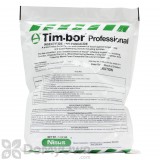
No. Timbor is not labeled for roach control and would not be the best choice for this type of application. If you have a current infestation of roaches we recommend the products that come in our Roach Control Kit. The products in the Roach Control Kit are perfect for most roach control problems in most indoor settings. This professional kit includes Cyzmic CS Insecticide for spraying the outside perimeter of the home and inside underneath appliances, behind cabinets, under toilets and sinks, etc. Advion Roach Bait Gel--one of the best roach baits on the market. Advion can be applied up high in the kitchen in the corner of cabinets and in cracks and crevices in kitchens and bathrooms. The bait contains a slow-acting poison that attracts and kills feeding roaches, who also spread the bait to other roaches by contact or by sharing food. Finally, Gentrol Point Source stations provide an IGR (Insect Growth Regulator) that will stop roaches from laying eggs, helping to halt the infestation. The combination of an IGR with roach bait is a highly effective roach control strategy that is widely used by pest control professionals.
Timbor will only penetrate 1/4 of an inch into the wood and will leave a visible white residue on the surface. You may simply dust it off before applying the stain. If you are wanting a product that does not leave a white residue and absorbs completely through the wood, we recommend BoraCare. BoraCare will penetrate all the way into the wood and will not leave a visible residue on the surface.
Timbor is not labeled to be used in this manner, and we can make no recommendations on this usage. Should you have any further questions feel free to contact the product manufacturer, Nisus, directly at 800-264-0870.
Yes you can use the dip method when using Timbor however, you will still be getting the same 15% solution rate as you would if you were spraying it on and getting the same 1/16" penetration level as well. To get the full penetration all the way through the wood we recommend using Boracare. Yes, you would want to get the surface powder left behind by the Timbor off the wood before using any finishing products.
It is recommended that you use a sealant or paint on the wood treated with Timbor. This will seal the product into the wood so that it will last for the life of the wood. It is not necessary to paint or use a sealant though.
Timbor is safe around wildlife and/or pets when it is used as directed. While you are doing a treatment, it is recommended that pets/wildlife out of the area until the product has dried completely. It should also not be used directly in sitting water. Timbor is used around structural wood so it should not come in contact with wildlife or pets.
Timbor may leave behind a white residue. If you think it may come into contact with the windows or hand rails while you are applying it, it would be best to cover them just to be safe.
The rate of Timbor in a 50 gallon tank is 75 lbs to achieve a 15% solution.
Tim-bor Professional should be mixed at a rate of at least 1.5 pounds to one gallon of water to achieve a 15% solution.
We apologize but we do not know of anywhere in Canada that carries the products we do. Many of our Canadian customers will have a product shipped to someone in the United States that they happen to know like a friend or family member, and they they forward it onto Canada. We do offer FREE shipping within the US.
Yes, as long as the application of Tim-bor Professional is completely dry, you can use a latex or other paint/stain product.
Tim-bor Professional is labeled as non-corrosive so it will not cause metals to rust.